
The Interview
An oral history interview for Radical Teacher Interviewed by Joseph Entin and Jocelyn Wills August 15, 2023. The transcript has been lightly edited for readability.
Joseph Entin: Okay, we are in business. Nice to see you both. Today is Tuesday, August fifteenth, about 3:15 in the afternoon. I’m Joseph Entin, from the Radical Teacher editorial board. I’m here with Jocelyn Wills and Linda Dittmar, also from the Radical Teacher editorial board. We’re here today to talk primarily to Linda about her life as a radical teacher, among other things. As Linda knows, we have some questions, but we’re mostly just interested in hearing what you want to tell us.
This is one interview in a kind of series that Radical Teacher board members are conducting with each other, to try and record some of the history of the magazine. At this point the primary audience, Linda, as you know, as we imagine it, is really for ourselves. At the same time, we also imagine these interviews as part of an archive that would be public facing, that would be available to researchers, or perhaps others who are interested in Radical Teacher. So we’re going to record this interview and preserve it. And we want to make sure that we have your consent to proceed and continue. Of course, as you know, if there are reasons why you don’t want to preserve this recording, that’s absolutely fine. You should just let us know, whether that’s at the end of today or in the future. Does that make sense to you? Do we have your consent to continue?
Linda Dittmar: You have my consent. Yes.
Joseph Entin: Great. Well, thanks. These interviews in part are designed to really start at the beginning, and to capture a kind of arc that begins not with your entrance onto the Radical Teacher board, but really with your life, your early life. And of course you’ve just written a book that I know is a memoir, so I know you’ve been thinking about these issues and questions and your own life in the larger context. Do you want to start by just introducing yourself, however you want to do that, and then maybe telling us a little bit about your early life: when you were born, where, what it was like, what your family was like.
Linda Dittmar: Yeah. At the same time, I wonder how much time I should spend on that, because there’s a lot there.
I grew up in Israel, but I was not born there. I was two months old when my parents brought me from New York to what was then British Palestine. My parents were not American. They were here for just one year, and I managed to get myself born during that one year. My dad was here to get some practical experience as an engineer, and I got born. So I came to Israel as a two-month-old baby, and grew up there.
I was born in 1938, and spent my early years during World War II in Palestine. My family left Tel Aviv and lived in a village to escape the bombing of Tel Aviv by Italian airplanes. My life in that village was bucolic, absolutely wonderful, between infancy and age six: climbing trees, walking in fields, losing a shoe in the swamp, all that kind of thing. World War II was happening, but other than hearing a weird name like Hitler, which I didn’t know the meaning of, it really wasn’t touching me, which is quite amazing. I remember visiting my grandparents in Haifa, and the port there was completely covered with a network of wires floating on balloons in the air, which was anti-aircraft protection for the port. Of course, to me it was just an amazing, magical experience. So that was my early childhood, which is in war. The grownups were worried about the Germans coming into Palestine. They were only stopped at El Alamein. But we as children had no sense of that.
We moved to Tel Aviv when I was six years old, and it was the last period of the Mandate. At that point the war was over, and both the Jews and the Palestinians, who we thought of in those days as Arabs, were fighting the British. We both wanted the British the heck out of there. But what I mention in my memoir is that we also wanted each other out of there. So instead of making common cause, it was the beginning of a new fighting between Israeli Jews and Palestinians. That has been going on from the get-go.
I go back a little bit, because my mother’s family immigrated to Ottoman Palestine in the 1880s. That was the first tiny little wavelet of immigration from Eastern Europe to Palestine, and it was spurred largely by terrible pogroms that were happening in Ukraine and elsewhere. Most American Jews come from that escape as well, only they came to America and my people came to Palestine. They settled in a tiny village on the Lebanese border, and the village land was bought by the Baron de Rothschild. In those days it wasn’t the usual kind of war expulsion, but nonetheless six hundred Druze Palestinians lost their livelihood when that village land was bought from another Palestinian. I’m saying that because the early settlement was much more complicated than people realize. Even though the Jewish population congratulated itself on buying land fair and square, what happened to the tenant farmers was really quite horrible. And my grandparents’ village was attacked by Palestinians and Lebanese people.
Another thing to remember is that there was major anti-colonial fighting going on in the whole region, in Lebanon and Syria as well as in Palestine, and the borders were not yet clear. You can’t say this was Lebanon and this was Palestine. It was all kind of mishmash together. One tiny detail that I learned in my research was that one of the leaders of the Arab anti-colonial people was a man by the name of Izz al-Din al-Qassam, and he organized only peasants and urban workers. He was not dealing with the elite at all. And it’s worth remembering that the Qassam rockets that are being shot from Gaza into Israel today are still named after him. So the memory of that leader is still very lively in the Arab-speaking world in general, not in the elite, but among the more rebellious, the people more in terms of looking for unity.
Anyway, that is a lot of background behind my early childhood. Tel Aviv and Israel in general were very socialist in those days. May Day parades were unbelievable, with all the different groups and all the red flags, and all the kids allowed off from school to attend. It was a big, big deal. And yet I’m feeling quite cynical about it, because the labor movement refused to make common cause with the Palestinians. They refused even to admit Palestinians into the labor unions. The only city where there was actually labor collaboration was in Haifa, in the port, because the British employed them together side by side. But by and large that was what was happening.
There was also a lot of agitation for allowing Jewish immigration into the country after World War II. America, Britain, and the rest of the world did not want the flotsam and jetsam that came out of the concentration camps, and Israel was the only one who took them. So I grew up during this incredibly difficult period, first seeing the fight against the British, then seeing the unbelievable immigration that came to Israel with so many traumatized and incapacitated people living in tents and shanty towns. It took quite a few years before all of that was normalized. Our schools were so full that we had to study in two shifts, morning classes and afternoon classes, and there were thirty-some children in each class. It was a pressure cooker beyond words.
The other thing to remember is that in addition to all the very traumatized European immigrants, Israel actively solicited and brought over a huge number of equally traumatized Jews from the Arab world, from Morocco, from Yemen, people who did not really intend to come. They were not part of this European Zionism, but Israel wanted them as cannon fodder. So really my life as a kid through high school was deeply enmeshed in all that unbelievable social turmoil, a level of hysteria almost in the population, I would say.
Meanwhile, we in the school were trained for Zionism beyond any words. I should mention that at the end of elementary school, between elementary and high school, I spent two months in a military training camp for fourteen-year-old kids. It was training us to be group commanders, essentially, and it was a grueling, grueling experience that I will not detail. We didn’t shoot, but we really learned everything else, and by the end of it, when I came home, I was in incredibly good physical shape, I have to say. Through high school I was, in a tiny little way, a group commander, and group meant boys and girls together.
So I feel like my own feminism comes from a different source than the American brand of feminism, because in early Zionism, in the labor movement, in the kibbutz movement, and in the early military experience, men and women were more or less alike. We were really together. I remember going hiking with some American friends in the seventies, and one of the guys didn’t want the guys to walk with the girls, because it would keep them too slow. And I thought, that’s outrageous. I never heard of a thing like that. It wouldn’t have happened in Israel. The other thing I saw at City College, where I first studied in New York when I first came in 1961, was that students were letting other students copy answers from their exams for pay. That also never occurred to me in Israel. You help them copy because they’re your friends, they’re your buddies.
At the end of high school, more or less, there was an incredible hike in the desert, climbing up and swearing loyalty to the state by candlelight. All of that was happening. And then I spent two years in the army, and in the book I have a chapter about that. I think one of the more important lessons I learned in the army is the depth of intra-Jewish racism that occurs between the Jews from Europe and the Jews from the darker world, mostly the Arab world, especially Moroccans. I trained in basic training with young women from that background, and the privilege that the white girls, that is, the Ashkenazi young women, had next to the darker ones was quite palpable. That was a lesson I learned.
I’ve been asked a lot how I came to my current politics, and it’s really impossible to answer completely. I can say that when I was in high school I was very taken with the labor movement, and I read several times over Maxim Gorky’s novel The Mother, which influenced me profoundly. We were seeing in the 1950s a lot of Soviet movies. In retrospect I realize they were propaganda, but nonetheless they influenced me very deeply in their images of heroism. You give your life for the people, that kind of thing. So my reading affected me.
There was a terrible massacre in Israel in October of 1956, just as I was entering the army, and I was very aware of that massacre, which was mostly covered up. Shortly after that there was a movement of young people, maybe five or so years older than me, called Compass, which was not exactly anti-Zionist but was internationalist. We don’t need a country, we need an international kind of community, brotherhood, whatever the word might be. I admired them as a kid, from a distance. One of them I heard from recently, a blog post. He’s still alive and kicking in London, which was very lovely to see.
There was also in Israel in the sixties a rebellion by the Moroccan Jews against the Ashkenazi establishment, and they created something that was called the Black Panther Party, patterned after the United States, and for a tiny bit they managed to have one person, a member of the Knesset. All of that was part of the political mishmash that affected me until the age of twenty, basically.
And then I came to the United States. I lived on the Upper West Side in a terribly decrepit house and went to CCNY. I was working in the public library on Forty-Second Street and going to school at night. They were organizing for freedom rides on campus, and I went and volunteered, and they wouldn’t take me because I was not an American citizen.
Joseph Entin: Linda, can I ask a couple of quick questions? I don’t want to get in the way of your story.
Jocelyn Wills: This is beautiful. I would like to know what drew you to New York, how you ended up here, and how you ended up at the New York Public Library on Forty-Second.
Linda Dittmar: What brought me to New York was marriage. It was crazy. I married an American who was still an undergraduate, and my parents would not allow me to cohabit with him, or go with him in any other form, unless we got married. He was a Jewish boy from Brooklyn, and we got married, and when we came back to New York he went back to school and was driving a taxi at night, and I worked in the library and went to school at night. After that he got into graduate school at Stanford. I had no idea what Stanford was, but the brochure had a very nice cover of blue sky and palm trees, and I said, after my misery in New York, that’s where I want to go. And that’s where I ended up. I took GREs. I never got the results, but apparently I did well enough to get into Stanford.
So that’s what got me to New York. There’s always some private life that gives direction to the unexpected. I never wanted to come to America. All I knew in Israel of America was magazines like Seventeen and Mademoiselle, and all the girls had perfect teeth and baked cookies and had boyfriends, and I couldn’t see myself there. But I did love Bobby, and that was that.
I do want to say a word about working in the public library, which changed my life. They put me in their periodicals area because I knew several languages. I knew Hebrew, I knew Arabic, I knew a tiny bit of French, and I could read other European languages, other than Slavic ones. There was this huge corridor with shelves filled with stuff that nobody knew what to do with, all kinds of brochures, magazines. Beyond the regular work of sending things to the bindery department, my job was to go through those things and throw out what I wanted to or keep what I wanted to. The judgment was mine, which was weird.
There was material coming from the Ku Klux Klan, and there was material coming from a music magazine called Downbeat, and there was material coming from I. F. Stone’s Weekly, and material coming from a newspaper called The Southern Patriot. And I would read those things. It was incredible. I learned about America. 1961 to ’62 was unbelievable. Among other things, The Southern Patriot reported on labor and race struggles in the South, and it made perfect sense to Linda. So I subscribed to it and started getting it at home.
Only years later I discovered where it came from. There was a woman by the name of Braden [Anne Braden], and you can check it out, I’m sure you’ll find it on the internet. The only time I discovered it was in the early seventies, when I was back in New York with my second husband, Jim, who was clerking for a federal judge, and I was commuting between New York and my job in Boston. The Southern Patriot had a fundraising event in some old hotel in New York City, and the keynote speaker was Angela Davis. You could either buy the full-price ticket and sit at the big round banquet tables, or you could buy cheaper tickets and stand on a balcony high up and just hear the talks. So we had the cheap tickets, and we were up on the balcony, and I looked down at the tables below, and everybody had white hair if they had any hair at all, and generally looked Jewish. And I said, oh, my God, this is the New York Communist Party, that’s who came to that fundraiser. And then I said, oh my God, so The Southern Patriot is a Communist paper. Some years later there was actually a conference at Harvard about the old Communist Party, and the editors from The Southern Patriot were among the speakers.
So what I’m saying is, it was incredible. And the poverty around the part of New York where I lived at the time was terrible. The address would sound good to you, because it was on Central Park West. But then New York was in shambles, and what you could and couldn’t buy at the local grocery was unbelievable. The kids in the neighborhood would tell me about knife fights around the corner, and when I’d come home from school late at night there was no doorman or anything, and sometimes there would be a Black person hanging by the elevator, and I would stop people passing by just asking them to see me to the elevator, and the passersby were all Black anyway, because it was very close to Harlem. They would look at him and say to me, you don’t have to worry, he already has his shot. And I’d go upstairs. That was my introduction to America. Totally not Mademoiselle magazine.
And then Stanford. Stanford very quickly became politicized, partly under inspiration from Berkeley. We were kind of a country club, really, but there were a bunch of good New York and other more impatient graduate students who were not content with that. There was a guy there, David Ransom, who was heir to some kind of money, and he established one of those alternative left newspapers. It was called the Midpeninsula Observer. And the wife of one of the creative writing faculty used to go over to Oakland and interview Black Panthers, and Black Panthers in jail as well. So there was that kind of activity very adjacent to me. My friends were really involved in it. There was a takeover of the president’s office for a while, and then there were very major demonstrations on campus. I won’t describe them, but there was all of that happening, which at that time was strongly anti-war primarily, though before that it was very civil rights, and then it sort of morphed into anti-war activity.
You may have heard of a faculty member who moved to Rutgers in New Jersey. Bruce Franklin was one of our professors, and I was with him and other friends on Sunday afternoons, I don’t know, we would meet and read Lenin and other things together. It wasn’t for credit, we just did it. And eventually he got fired. He was very active in the Venceremos Brigade, among other things. So if you came to his house, the dining room was filled with Mao’s little books and flags and whatever.
I’m saying that because I was never that far radical myself, but I was connected to it and informed by it. I was also a responsible, obedient student at the same time, and was doing my PhD. But I was getting educated into politics. There was no question about that.
Jocelyn Wills: Just for the record, Linda, what did you study in your two years at City College? And then where did you graduate from? Where did you start your graduate work, and what year exactly did you come to the US? Was it ’58, when you were twenty, or was it later?
Linda Dittmar: I came to the US at the very end of 1960, like Christmas 1960. So really I was here from ’61, and I moved to Stanford as an undergraduate in ’62, and got my MA there in ’66 and a PhD in ’70, I think. Actually I left before I finished the PhD. I finished it at UMass Boston.
As an undergraduate I was admitted to CCNY as a non-matriculated student and just took things. I had to take biology, among other things. I had to take speech for foreign students, which I failed and thankfully never had to take again. I took history. I took not political science but a course in civics. The history was a course in post-Civil War American history, and a course in literature that I don’t particularly remember. I didn’t have a major at that point. I had to take algebra, which horrified me, but I did quite well, surprisingly enough.
I mention that because in the civics course, at some point people were kind of celebrating the end of the Civil War, and one of the teachers said, it’s amazing how far we’ve come since those days. And I, with my heart beating anxiously in my throat, raised my hand, having seen my own neighborhood, and said, I don’t think we’ve come very far. That was a very scary moment in my life.
The other very remarkable thing was that in that history class we had a take-home midterm essay. We didn’t consult about the topic. There were four questions to choose from, and we chose one. When the teacher returned the exam, he sneered at the class that we had all chosen the least important topic among the four questions he gave us, which was what happened to the Native Americans. So I’m talking about 1962. That topic was a stupid topic to waste your time on. So I was learning all that stuff by osmosis, in some ways.
At Stanford I got my MA in ’64, and then I left in ’67 with another boyfriend, actually with Brett Harold, who was a member of Radical Teacher for a short while. Then I joined UMass in ’68 as an adjunct, and they laid me off after the first semester because they didn’t need me anymore. It was really to teach freshman English. And then a new chairman came in and brought me on as a regular tenure-track person without really interviewing me or any process. He just looked at my record and said, well, yeah, why not. That’s how people were hired at that time. It was partly the old boy network, and a token girl here and there, and that was about it.
So I was at UMass really from ’69 until I retired in 2007. There were sabbaticals, there was leave without pay here and there, but I was there basically almost from the very beginning. It was founded in ’65 or ’66 or something like that. We lived in rented housing in downtown Boston, some in a hotel, some in an underused office building. The library was in the armory. The group of people who taught at UMass at that time were a strange and wonderful group of people who came there for very unclear reasons, and one thing they came with was ideals, to create a new university.
And our students. First generation is an understatement. Many of them didn’t know what they were doing there. Many were Vietnam veterans bringing memories from the war with them. It was so not Stanford, beyond words. In the beginning I didn’t know what I was doing there. I couldn’t figure it out at all. But I grew to love that place. It really was incredible. It was my life, really, quite wonderful for me, and hard to leave, really hard to leave, but it was time to leave. The students were amazing, and many of the colleagues were wonderful too. They were such feisty people, willing to take on this very difficult school that was recreating itself out of nothing with a very difficult, complicated urban population.
Joseph Entin: Again, just for the record: your degree at Stanford, the PhD, was that in modern thought? And what were you studying?
Linda Dittmar: No, it wasn’t in modern thought. That was created after I left. So it was officially in English, though in truth it was comparative literature.
My PhD was a totally unreasonable, ambitious PhD that began with Kafka and continued, I don’t know, Joseph, if you know John Hawkes at all, but I included John Hawkes. He was a very surrealist, interesting, experimental writer. It included John Barth. It included Samuel Beckett, and it included Robbe-Grillet. My interest really was structural. What I was interested in is the way a work falls into pieces, and how the pieces lead the reader into certain conclusions. So it really deals with modernism in the extreme. The title of the dissertation was “The Labyrinth Within,” which at that point had to do, in my mind, with literature leading the reader into ethical questions about their place in the world.
I was not then thinking about it politically, as I do now, but I was thinking about it ethically, and I was taking courses at Stanford outside the English department that dealt with those questions, with various forms of crisis. Not political crisis, but understanding crisis, which of course reflected political crises. It came out of World War I. It came out of World War II. It came out of fascism. The Nabokov that I was interested in was actually an early novel called Invitation to a Beheading, which you can look at as a kind of totalitarian fiction. So it’s not Lolita. That didn’t interest me particularly.
There was that strain in my PhD that translated itself to what I was teaching at UMass and to whatever I was writing about as well. I always get irritated when people describe formalism in literature as anti-political. My formalism became increasingly political. But it is formalism. I’m interested in how form creates ideology, and that’s how I wrote my memoir too. It’s not simply a story about the person who did or didn’t walk into the barricades or into the fire. It is really how the story is being told, and the issue of point of view, and how the voice of the point of view works in that material.
When I did a small piece on Salt of the Earth, what was interesting to me in particular was the use of the Spanish language interfering with the English, and what that says within the material. Because Salt of the Earth is in every way social realism, but there is that aspect of it that disrupts continuity and creates a little crisis in comprehension. That’s what I was really interested in. That’s what I worked on.
Joseph Entin: I think that’s something that you and I have in common, actually, a deep interest. I think about the issue that we edited on protest art, right? I think that you and I were both interested in matters of form as much as or more than sort of political content, the way in which form shapes the way people experience a work of art.
So you left Stanford and came East in part because of the relationship you were in at the time. And it sounds like you were doing some political reading, you were in a reading group with Bruce Franklin at Stanford, and certainly there were these kind of earth-shaking events and social movements of the mid to late sixties that were happening. You’d come out of this incredible political crucible in Israel and Palestine. Was there a moment in this period when you felt like you started to identify as somebody who was a radical, where that idea became important to you, and your thinking about your own politics shifted or cohered?
Linda Dittmar: Let me backtrack slightly, because when I came to Boston, before I took the job at UMass, I had a job offer from the Hebrew University. And I went into a terrible crisis trying to decide. I actually turned UMass down. I was going to go to Israel. I felt I have to. I didn’t want to at all, but I have to. I became sick, and then a friend of mine said, after a while, Linda, I think you’re not sick. I think you just don’t want to go to Israel. And I contacted UMass and told them I want the job, is it still open. They said yes. And then my sickness went away.
By then political things were happening here, and Israel felt stultifying and claustrophobic to me. Here, it seemed we were on the brink of a revolution. We weren’t, but it felt like we were. And I did join a radical faculty group at UMass, and we were a very tight and important group together. Arthur MacEwan, who is our radical friend, was part of that group, and other people were too, whom you may or may not know. I also was in a study group. But there began to be demonstrations, and I would join them. At that point it sort of began to include feminism as well. So there was that kind of shift.
But what was obvious to all my friends and me is that all of it is connected. The racial stuff, the war stuff, and the gender stuff were all part and parcel of one thing, and socialism was part of that too. So that was just inevitable for me, given that I was at UMass, given who my friends were, given what I was reading and what we were talking about. That’s all I can say. It was there.
Jocelyn Wills: Linda, can I just follow up on that? How long into your tenure at UMass did you start joining these reading groups? People are under the pressure of a tenure clock, right, getting the publications done and all that. And I’m also wondering, as a corollary: how much did the students that you worked with and clearly loved, how much influence did they have on your thinking and your politics?
Linda Dittmar: Well, first of all, the students themselves were very organizing and political there too. So it was a join-us-or-don’t-join-us kind of thing for the faculty, in many ways. We didn’t lead them. They really had their own momentum, and it was wonderful to have solidarity with them. We had teach-ins and all of that together.
Jocelyn Wills: And the other part of the question: how long into your tenure at UMass before you joined these study groups and reading circles and made these wider connections with friends there?
Linda Dittmar: I think it was quite early. And I should also mention that we had in Cambridge the organization Bread and Roses, that was organizing heavily for feminist consciousness-raising, and I was part of that. But I think it was really more or less in the beginning. These things were forming quite early.
The thing that people have a misconception about is the pressure to publish and get tenure, which did not exist in that way then. In fact, I came up for tenure with no publications at all, and I was almost fired. And how I wasn’t fired is analogous to the story that Susan O’Malley tells also.
I had a new baby at that point. The English department recommended me, but the collegiate committee was hesitant, and I was very, very involved not only in the radical activity but in institution building, in committees and all of that. So I asked for a meeting with the Chancellor. I dressed up for the occasion, and I had my baby with me, and I left him with the secretary in the antechamber, who happened to be a friend of mine and a former student. And I walked in, and I cannot believe what I did or where it came from, but what I said after shaking hands was, I can’t believe you’re thinking of firing me. That’s what I said to him. Where the chutzpah came from I have no idea, but I did it. And he was a very courteous Italian American gentleman, and he said, why don’t you sit down and tell me about your work. And I did. And then he said, well, I’ll think about it, and thank you for coming.
And that evening he called me at home, as we were giving Jeremy his bath, baby Jeremy, and he said, I decided to give you tenure. And that was just on the strength of what I was saying. I described what I was teaching, and at that point I was teaching film, not just literature, so I actually talked about an Italian film which I used as the introduction to my film course. I wasn’t fabricating anything for him. But it was another time. Nowadays I would never get tenure. And in fact, when I came up for promotion to full professor, I also was not that spectacular, and an argument was made about my work in other terms, and it was really quite wonderful and unbelievable. So I was very lucky. I was really quite lucky.
Joseph Entin: Wow. And when and how did you actually get involved with Radical Teacher? Certainly there were other people at UMass. Eventually there was a cohort of people from the faculty at UMass who were engaged. But how did you find your way to Radical Teacher?
Linda Dittmar: Pam invited me. And I felt like I already knew quite a few Radical Teacher people socially, anyway, so I felt like a ghost member of the group. It was not a big deal.
I want to say that after I got tenure I started writing and publishing, because I wanted to prove to them that I can do it. So for a while I would not have wanted to join Radical Teacher, because I was really busy doing other things. And then Pam came up at just the right moment and suggested it. And it was right.
I should say that before that, in the seventies, there was an organization of women faculty that was called Marxist-Feminist Group 1, and we met for weekend conferences about three times a year, sort of in the Northeast. There were one or two women from Chicago who joined, but they were all academics. That was my one outside-of-UMass activity for a while. After Jeremy was born it was hard for me to continue coming to that. And then later on Pam suggested Radical Teacher. And I said, sure.
Jocelyn Wills: Do you remember what year that was, that Pam invited you?
Linda Dittmar: I really don’t. I think maybe Bob can research it. It’s in the eighties, maybe late eighties. I’m not sure.
Joseph Entin: And do you have memories of Radical Teacher meetings from that period? I don’t know if you remember your first meeting, or meeting other people on the board you didn’t know, or your sense of the magazine at that time and of the editorial board.
Linda Dittmar: I don’t remember if my first meeting was on the farm or not. But I remember being very shy, and glad that there were some people I knew there, but actually not that many. Some of the people you think of from UMass came later.
So I knew Louis, but I knew him in an uneasy sort of way in Boston, because Louis always had a way of making somewhat sarcastic-sounding jokes, and I felt uncomfortable. I didn’t know how to deal with that. I don’t know if Pam was the only one in the room that I knew. I’m not sure, and I really can’t say whether it was at the farm. I remember being shy for more than one meeting, in fact.
But also really loving the comradeliness of the group. It was different. The UMass radical group was a bit like that too, but there wasn’t quite the same warmth that I saw in Radical Teacher among us. We had projects together. It’s hard for me to answer that question, actually. I don’t know if you want to ask it in another way, or just move on, but I think it took a while for me to feel comfortable, really.
Jocelyn Wills: So given that it took you a little while to feel comfortable, what made you decide to remain and continue with Radical Teacher?
Linda Dittmar: Just the work we were doing, the thinking that was going on, the people who were doing the work. It seemed great. It really was great. I love working with people, I really don’t like working alone, and it was just wonderful to see how people work together in Radical Teacher. I think that was quite special.
Joseph Entin: Were the board meetings being held in Middletown? Were there some in Boston at the time?
Linda Dittmar: The meetings were in Middletown. The office was in Boston, and the office was in the basement of a church quite near my house. We had the key to it, and we would go and fill envelopes and address them by hand and send them to subscribers and do other correspondence. I think for a while Frinde and Louis kind of led the way on all of that.
I remember writing the minutes for the first time. The minutes early on often had a kind of joking tied to them, so my first minutes I did the jokey thing too, and there was a kind of slight swagger to the jokes. And somebody, I’m forgetting his name now, he was in California at the time and not present at the board meeting but reading them, wrote to me irritated with me and the tone I took, which I thought was no different than the tone Dick and a few others were taking. I don’t see why not. But anyway, that was a kind of slap on the wrist that I got at the time.
I forget which was the first issue I co-edited, but I think it was with Louis, and it may have been the issue about labor. We did two of them. That was really interesting. I remember Marjorie Feld was with us at the time, and she was in Boston, and we traveled together to meetings. It was interesting to work on the labor issue especially. I was trying to track down from the AFL-CIO what they were doing about globalism, and I got to their education department, and they didn’t know anything about globalism. And I thought, oh my God. But that was sort of me dipping my toes into editing at that point.
I enjoyed the editing. It’s really interesting to see what people submit and what they can do with their submissions, and what we want to suggest to them to do. We are much more interfering with our writers than most professional journals tend to be, because we want certain issues to come out from their writing, which they may have dormant in their work. So it was really interesting to talk about that, and about the conversations we had about whether a certain piece is in fact radical. What do we mean by radical? I think it’s an open question. We haven’t answered it yet, exactly. But it was just really interesting work.
Frinde and I were co-editors for the manuscript submissions for many, many years, and we worked absolutely beautifully together. It was just a pleasurable, wonderful thing. We hardly ever disagreed, and when we did disagree it was so easy to sort out. She was on time, and I was on time, and everything was great. Really great.
Joseph Entin: It’s really interesting. For me it’s fascinating to remember. I’m not even sure I knew that Radical Teacher had an office. I remember the post office box, and going there and picking up the mail and opening all the envelopes and responding to all the subscribers and depositing the checks, and doing all that work with Saul for a couple of years when we were living in Cambridge, in the late nineties, before we went online.
It’s interesting thinking about the kind of guy energy or male energy or swagger that there has been, and maybe still is, on the board. And you were a woman, and somebody who spoke with an accent, right, who had grown up outside the United States. You also said you were sort of shy on the board at first, and that makes sense to me. Radical Teacher can be its own world, and to enter into it from the outside, or for the first time, is not always so easy. But I wonder if your perspective, and your sense of what was happening on the board, and your entrance into the magazine, were shaped by some of those other factors: gender and language and history.
Linda Dittmar: I don’t know if it was shaped, but it was a challenge. And again, going back to my coeducational experience in Israel, I was somewhat prepared for it. I was used to being the same as a man there, and frankly I lost some of that in America over time. By the time I came onto the board I was in a fairly conventional marriage, and I had to fight sexism at UMass repeatedly. It was benign sexism, but it was sexism anyway, towards women faculty, in my opinion.
But I think that the swagger at Radical Teacher was hard. The famous joke that Dick made about the women sleeping together, mattress to mattress, in the room at the farm was difficult. And I came once to a Friday meeting, I drove by myself to the farm on Friday, and it turned out that I was the only woman in the room. We were having dinner and drinking, and the jokes became more and more sexualized, and I don’t want to even tell you what they deteriorated to. But there I was, and I didn’t know what to do. I really didn’t know what to say or how to disrupt it. They forgot that I’m a woman, or whatever. They just did what they were doing.
But I think what’s more painful for me, and that’s not an accusation or a criticism at all, is that I could see how these older guys, specifically Louis, Dick, and Paul, had these old boy networks that were so powerful. And I didn’t have that. I did not have that kind of friends from graduate school to the present day. Recently one of my graduate school friends passed through Cambridge, and we had a very nice time, and he lives in Brooklyn, and I’ll probably see him again at some future date. But to be friends with a male comrade, always in my experience, then, I’m not talking about now, there was always the issue of a certain barrier, because friendship and something more than friendship can happen. And you don’t know what to do with that. So intimacy, and I mean intimate friendship, I’m not talking about physical intimacy, felt forbidden or impossible on some level. And it was hard for me. It was really hard.
I’m thinking about boy talk and girl talk when it is just chat, not a meeting or something like that, and how much of the personal discussion happens among whom. About the parents, about the partners, about the children, as opposed to the job, the career, the organization you belong to, the book you are reading. There are these divisions. And what I really was jealous of is these three guys who had these wonderful loyal friendships going way, way back, and they were both intellectual and political and personal. And I didn’t have that, and I wish for it very much. I think it’s wonderful. So I think that was the issue of gender. And it’s a society. It’s not their fault.
Jocelyn Wills: You clearly experienced those transitions to where it is better. I want to ping back to something you said a little earlier, about us not being very clear about what we mean by being a radical teacher, and how we define that. So I’d like to ask you, if you could define it, what does it mean to you?
Linda Dittmar: To me it means teaching for radical social change. And the question then is, what is radical as opposed to liberal social change? The word means to go to the root, yes. But I’m thinking, for me as a teacher, it meant really leading the discussion into the underpinnings of what holds a certain system in place, and whether that system needs to be overthrown, or whether the material we’re reading is showing a way to overthrowing that system. And the overthrowing then raises the question, towards what? And towards what, for me, is always towards an egalitarian form of community interaction. I’m not using the word nation at the moment, but whatever the community is. That’s what radical teacher means to me.
I don’t often ask myself that question. I do sometimes, when I read an article like some of the ones I read for the refugee issue. I did ask myself, what’s radical? And I did say that I think they’re calling more for the politics of empathy than the politics of social change. And empathy is needed for social change, but for me it’s not enough. So that is sort of my answer, my very hesitant answer, for what it’s worth.
Joseph Entin: I find it really compelling, and it does echo what I imagine a lot of people on the Radical Teacher board would say. I think the way in which you describe it is actually part of what has allowed the board to be both committed and also non-sectarian, right, open in a certain kind of way to various modes or forms of restructuring society.
I’m curious to hear you talk a little bit about your teaching career, and reflecting on your years at UMass. Obviously UMass has these incredible students, lots of first-generation students, working-class students, I imagine like the students we have at CUNY, many of them very earnest and serious and working while going to school. At the same time you are obviously deeply committed to them, to your classroom. I’m wondering how that dovetailed with your radicalism, with your teaching. How did you think about your teaching and your students in the context of trying to be a radical educator?
Linda Dittmar: Luckily, I had the choice of what to teach, what courses and what material. I really had a lot of choice, so I was able to choose material that would in some way open the door to that kind of thinking, in many different ways. In literature, I taught a lot of minority literature, immigrant literature, literature from other countries in translation. It always opened those kinds of questions. I think the students knew that. It’s exactly the kind of thing the current right wing would hate, is what I was doing, basically. In my lower-level classes I often used the very good anthology that Pam and Bob Rosen did together, Literature and Society, which was very helpful for that. And when I taught in India I took that with me and taught some from it over there.
I had no real trouble. What I do, and I think that’s true for my current book as well, is that I don’t stand on a soapbox and I don’t preach. I don’t tell them what to think. I try to open the possibility for them, and they could see what I am thinking, but I wouldn’t be exactly announcing it. So my approach to teaching was quite gentle, I think. But in that personality, I had such empathy for the students and respect for them that they knew to trust me. I really do think they trusted me. I had the reputation of being a very tough teacher, and there were many students who stayed away from me for that reason, but those who took me had faith that I’m not going to harm them, even though I pushed them very, very hard, which I did.
I had a very interesting experience early on with a lower-division course. We had an interdisciplinary course called Law and Justice, and I taught a little seminar in that, and among other things I taught Brecht, either The Good Woman of Setzuan or The Caucasian Chalk Circle, which I taught many times anyway. And I had this student there who fought me all along the way, and when I did the Brecht he said, that’s a Communist play. He really hated all of that. And I saw him on campus afterwards, and I was always avoiding him. One time I actually had to walk across the plaza just not to encounter him, and he made a beeline to me and he said, Professor Dittmar, do you remember me? And I said, oh yeah, I do remember you. And he said, I know I gave you a very hard time, but I want you to know that you were right.
You never know where it comes from. You never know what the effect is long term. But you can teach The Caucasian Chalk Circle and talk about social justice and talk about totalitarianism and all the things that are involved, without necessarily making a speech. And for me that worked. Teaching Heart of Darkness, teaching Coetzee’s Waiting for the Barbarians, all kinds of works that really enabled me to bring up ideas like that.
There was one time when I taught a novel from El Salvador, a wonderful novel called One Day of Life, and in it a priest, sort of like Father Romero, is killed by right-wing militia. And an older white-haired man, a retiree, said to me, what do you think of religion? And I was totally unprepared for that question. I’m an atheist. But I said to him, I think it’s as good or as bad as its practitioners. And I think that was just the right answer, because the guy in that novel was a wonderful guy, working with the peasants, the good guy. Never mind if he’s Catholic or whatever he happens to be.
But the UMass students, by and large at that time, and I can’t speak for now, were very open to this kind of more lefty material that I was bringing into the classroom. We did The Bluest Eye a million times, various such things.
Joseph Entin: It’s just an amazing story, about the student coming over to you, somebody you felt like you had maybe alienated, and then you left this other mark on him without realizing it. That’s really wonderful. I’ll mention that I had an encounter with another student who twenty years later was still angry with me for a grade I gave him. So you never know. That’s both ways.
Linda Dittmar: Sometimes.
Joseph Entin: Do you feel like, I mean, again, you’ve been on the Radical Teacher board now for a long time, thirty years, almost thirty-five years. How do you think it’s changed over time? You entered at a particular moment. Some of those major figures around the board are no longer with us. Louis and Dick have both passed. The composition of the board has changed dramatically. What’s your take on the way that Radical Teacher has changed over time, in terms of the people who run it, the way that it operates, the issues that it’s interested in?
Linda Dittmar: I think it’s incredibly resilient. I am so proud of Radical Teacher. It is quite amazing that we could bring in quite a number of new people, including you, Jocelyn, more or less at once, really very quickly, and not undergo any major tremor from that. I think it’s just fantastic. I suspect that we are able to hold it that way because there’s a kind of culture of how we are.
I think the disruption, to me, is not so much the new people as it is the fact that we have to meet on Zoom. I think that’s really very unfortunate. Before, we met always in Middletown. The people from New York drove over, the people from Boston drove over. There weren’t people from far away, like Chris someplace in the wilds, or Michelle someplace. We were able to form an easier consensus, which meant that we could reach agreement with the nod of a head, with a meeting of eyes. You didn’t necessarily need to explain quite the same way. And I think that is a very big loss, that we can’t do it together.
I feel very jealous of the people in New York who can go to a party at Mike’s house or meet in some other way. I think that’s really wonderful. And here I am in Boston. Then I’m always asking, could I come to New York on that particular date? And no, I can’t, for this reason, I can’t, for that reason. I think that we lost that. Maybe it’s still temporary. But it is a shame. That’s more important to me than the change in personnel, so to speak, which I think is continuing very well.
A little thing is that maybe we don’t know enough about one another. It was interesting for me at the previous farm meeting at your house, Joseph, when Jesse raised the question of having a cluster on Ukraine and Palestine, and then somebody else said, oh, I want to be on that too, and nobody realized that I’d been working on this for forty years. And I said, oh, well, I want to be on it too. But they didn’t know me. It’s not that they didn’t want me. They just didn’t have an idea. I’m just a foreign accent person.
I’ve been teaching a course called Politics and Literature, the political imagination. It’s one of my two signature courses that I taught over and over and over again, and it changed over time, but for the last fifteen or so years of its life it was really a course about colonialism and post-colonialism. Before, it was more about domestic politics, and then I shifted it.
And I actually feel that all the issues in Radical Teacher, the clusters that we did that go beyond the United States, are ones that I proposed first, actually. The one about teaching abroad, the one about archives. I remember suggesting archives and Louis poo-pooing it, and ten years later it came, and I no longer took credit. I said, it belongs to the group, it’s not my proposal anymore. But I was aware that that is on my mind. And when we had the call for papers for socialism, I had to remind the drafters, don’t forget international. The American perspective still is very provincial. We only think of what we know, understandably. But there is that other thing.
So there are ways in which I still feel a little bit in a kind of limbo. I don’t really feel outside, that’s not the issue. But I’m thinking that with the new people we need to know one another a little bit more. Before all these interviews are done, and I’m thinking of Sophie’s notion that we’ll interview one another very quickly, what I wonder is whether we can have a go-around and just say to each other what we teach and what we did our dissertation about, something like that, just so that we know a little bit more about one another. Other than our work together, which I think is excellent. I really have no qualms about anything.
Joseph Entin: It’s interesting. When all the meetings were in person, coming from New York or from Cambridge, because I was coming from both places at various times, you would spend time in the car to get to the meeting. So I would ride with, you know, James Davis or whoever from New York, and then we would be stuck in the car for four hours over the course of the day. So you got to know people. And then you would show up at the meeting, and there was an hour beforehand when you were having lunch or whatever, and there was a break, and so some of that happened by the by. Which is harder on Zoom. We all just show up and kind of start the meeting. And of course people like Sophie and Neil, as the current manuscript editors, they meet every week on Zoom and get to know each other really well.
Linda Dittmar: But I agree, it’s harder for those of us who are just sort of on the board at large. And I should mention Neil was the other one, with Jesse, who wanted to work on this post-colonial stuff.
Jocelyn Wills: I think what you’re saying is really important, because part of joining the board, for me, was learning about people’s backgrounds, at least their research and their writing. But we would all benefit, I think, from talking to each other about teaching, since it is Radical Teacher, and sharing things that we’ve done that work, things that we’ve done that don’t work. I know I could learn a lot from everybody we’re interviewing too.
Linda Dittmar: We had that at UMass, actually. Faculty groups, a whole semester long, that just met to talk about teaching. We did some of it through my radical UMass group. We did it voluntarily. We simply matched up with somebody and did that. But we also had a grant for faculty to do that, and that was less radical, but it was still pedagogically useful.
Joseph Entin: To your point about Radical Teacher‘s resilience, I think it does have to do with the kind of human relations that people have been able to build. The people who’ve come onto the board and stay on the board are the people who have and then continue to develop, I think, the richest human relationships with other people. Jocelyn, you and I have known each other a long time. You came onto the board, and I would still see you regularly at work, and your first issue was working on that issue with Dick, where we ended up just kind of meeting socially several times with him in Manhattan. Those are the kinds of relationships that I think keep people coming back to the board and keep people involved. And I think, as a board, we do have to think about how to continue to foster that kind of intimacy, as you say, among the people on the board, because I think that is what allows us to function as well as we do, in large part.
Linda Dittmar: Yeah. Which worries me about the people who really are not within geographic distance.
Joseph Entin: It’s challenging. I think the record of those people staying on the board and staying active is weaker, certainly. And it’s one reason why we’ve been able to build a kind of cluster of people in New York, because there’s a group of us who have regular ways of seeing each other that keeps people engaged.
Anyway, there’s so much more we could talk about, Linda. I want to run out and read your book even more now, because I know you told us a certain story, a narrative about your early life and your life as a whole, and I know there’s so much more. Are there other things that you want to be sure we talk about, or that you want to say in this interview?
Linda Dittmar: No, I really can’t think of anything.
Jocelyn Wills: This has been so great. We should have these hour-and-a-half-long conversations with everybody, to get to know people and their trajectories. It’s just been fabulous. And I just want to say one quick thing, Linda. Something that meant a lot to me last summer, coming to the farm, is that I knew Joseph and I knew James, and James wasn’t there, and I had just met Sophie, but the warmth that you and Pam and Susan showed was just so beautiful. I’m so grateful, because I can tell you, that’s one of the things that makes me not want to leave the country. But I will come back regularly, because of the warmth of the men, but really particularly the women. You just welcomed me. It was so lovely.
Linda Dittmar: It was really quite lovely. I felt like I connected with you in some way.
Jocelyn Wills: I love you too. I feel like I’ve known you and loved you for so long, and I feel like we have a special connection. So I’m so happy about that.
Joseph Entin: Well, maybe that’s a nice place to end. Thank you so much for doing this. Thank you for all your work on the board, with your students, in world society, as a thinker and activist and writer, for all these years. And this new chapter that’s just starting for you, of putting your book out in the world and getting feedback on that and seeing where that leads. It’s exciting. It’s an exciting period. So thank you very much.
Linda Dittmar: I feel appreciative that I’m having this interview. But, as you know from previous correspondence, I always said, there’s also this one, and there’s also that one. Because we’ve just had basically now three people, it makes us seem very special, which it really shouldn’t. So I think we need to have others.
I was writing down everybody’s name that you mentioned. If there’s still room, we have to interview Pam. She brought me in. And I’m thinking of Wally, who was a quirky, quirky person, but also part of Radical Teacher. I was given his letter to the board as a model for what letters might be, and he wrote it completely as a personal ad to meet a guy. It described bodies. It was very funny. We had all kinds of amazing people as part of this group. It was really quite something. Maybe we are now a little bit less quirky than we used to be, and maybe that’s just as well.
Anyway, thank you so much for this opportunity. I feel very privileged and honored and cared for and listened to.
Joseph Entin: Thank you so much for spending this time with us. All right, I’m going to stop the recording.
About Linda Dittmar
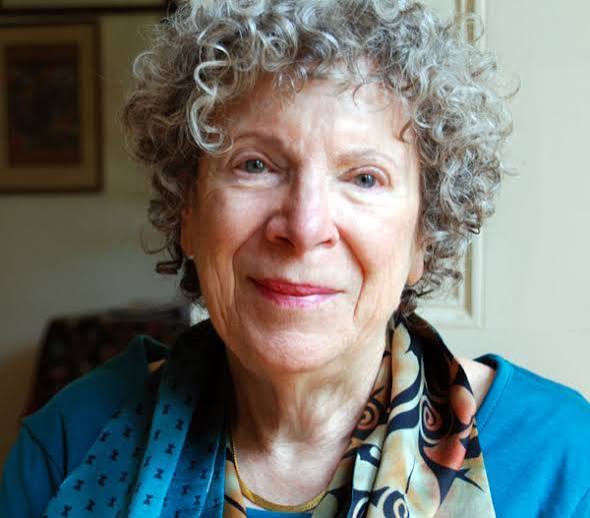
Linda Dittmar is Professor Emerita of English at the University of Massachusetts Boston, where she taught literature and film studies for some forty years, and a longtime member of the editorial board of Radical Teacher.
She was born in New York in 1938, during a single year her Israeli parents spent in the United States, and was brought to British Mandate Palestine at two months old. She grew up in a village outside Tel Aviv during World War II and then in Tel Aviv itself through the end of the Mandate, the 1948 war, and the years of mass immigration that followed. She served two years in the Israeli army before leaving for the United States at the end of 1960.
She studied at City College of New York while working at the New York Public Library, then moved to Stanford University, where she earned her MA and a PhD in English with a dissertation on modernist narrative form titled “The Labyrinth Within.” She joined UMass Boston in 1968, first as an adjunct and then on the tenure track, and remained there until her retirement in 2007, with visiting lectureships in India, at Tel Aviv University, Tufts University, and the University of Paris.
Her scholarly publications include From Hanoi to Hollywood: The Vietnam War in American Film (co-edited with Gene Michaud) and Multiple Voices in Feminist Film Criticism. In 2023 she published Tracing Homelands: Israel, Palestine, and the Claims of Belonging (Olive Branch Press), a braided memoir, history, and travelogue that returns to the sites of her Israeli childhood to confront the ruins of Palestinian villages destroyed in 1948 and the silences that have surrounded the Nakba. Her writing has appeared in The Massachusetts Review, Jewish Currents, the Harvard Divinity Bulletin, Consequence, and Nowhere, and her work has been supported by the Fulbright Foundation, the Massachusetts Cultural Council, the Santa Fe Art Institute, and the Vermont Studio Center.
She joined the Radical Teacher board in the late 1980s at the invitation of Pam Annas, co-edited manuscript submissions with Frinde Maher for many years, and co-edited clusters on labor, on protest art, on teaching abroad, and on archives.